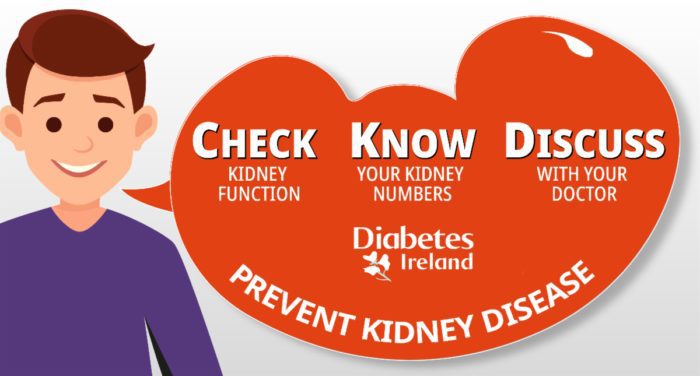
Diabetes Ireland ran a campaign to highlight the need for people living with diabetes to be aware of their kidney health. The campaign was launched to mark World Kidney Day on March 10th 2023 in collaboration with the Irish Kidney Association.
“I am delighted to support the Diabetes Ireland campaign to highlight the risk for chronic kidney disease in people living with diabetes. It is crucial that all people with diabetes are aware of the routine urine and blood tests to check their kidneys, these simple checks should be an essential part of their diabetes checkups with their GP/diabetes team. I urge all people with diabetes to discuss their kidney health with their doctor or nurse at each appointment as early detection of any kidney problems is vital, taking action in the early stages of kidney disease with healthy lifestyle choices and medication can delay further kidney damage”.
Rachel O’Hora was diagnosed with type 1 diabetes at 8 years of age. She recalls “I went from being super active to falling asleep on the couch twice one Sunday afternoon. My parents had their suspicions as my dad’s sister had been diagnosed with type 1 diabetes at the same age as me. I remember being collected from school, going to the GP for a blood test, and going straight to hospital where I remained for two weeks. Mum and dad did my insulin injections for about the first year but then my friends started having sleepovers and I wanted to be able to go, so I had to start doing it myself! 30 years later I’m still as independent as ever!
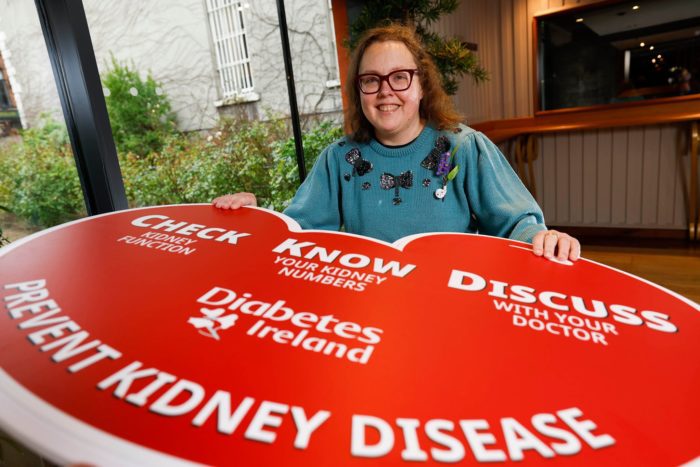
Picture of Rachel holding a CKD campaign banner: Check – Know – Discuss to Prevent Kidney Disease
Rachel recalls struggling to manage her diabetes during her teenage years.
“I wasn’t a troublesome teen but the way I rebelled was with food. I used to sneak biscuits from the press and hide the packet under my pillow. The freedom of secondary school and having pocket money meant I could buy whatever sweets I wanted at lunchtime or after school. This only got worse when I went away to college, total freedom to eat whatever I wanted.”
Rachel recalls following a traumatic incident in her late teens she completely stopped looking after herself. “I frequently took insulin without doing a blood sugar check. At one point I was only checking bloods about once a month if even that”.
When Rachel was 28 years old, a newly qualified teacher she started to feel very tired and just put it down to the mental tiredness associated with her work which other teachers spoke about also. At a routine diabetes clinic appointment, Rachel mentioned her swollen ankles, it was then that immediate action was taken and what was to be a routine appointment, with Rachel intending to return to work in the afternoon, turned out to be a daylong event with 3 or 4 specialists coming to check on her including a social worker. She was put under the care of a Consultant Nephrologist and was diagnosed with stage 4 chronic kidney disease.
Rachel recalls “The doctors thought I’d be needing dialysis within six months, but I implemented all the dietary and lifestyle guidelines immediately and managed to delay going on dialysis for over 3 years. First, I was on a form of home dialysis treatment called peritoneal dialysis and then later started haemodialysis in hospital. I also had eye problems and a neuropathic condition called charcot foot affecting both of my feet”.
“I often think about what I could’ve done if I’d been diagnosed with chronic kidney disease sooner, the difference it would have made. The kidney blood test for GFR should be a routine test for all people with diabetes alongside the HbA1c. I was diagnosed at a GFR of 25, which meant I was already at stage 4 chronic kidney disease”. (stage 1 is normal and stage 5 is total kidney failure).
When Rachel was being assessed for a kidney & pancreas transplant some heart issues were diagnosed. Rachel had a double heart bypass six months ago. She hopes to get back on the kidney & pancreas transplant waiting list soon as her recovery from the heart surgery is going well.
Rachel says:
“So it’s been a tough road, life with type 1 diabetes has always been a battle for me. I started using a flash glucose monitor (FGM) nearly 5 years ago, and I’m currently awaiting delivery of a continuous glucose monitor. The FGM was a total game-changer for me, my HbA1c has dropped from over 14% (129mmol/mol) at my worst point to 6.4% (46.4 mmol/mol) at my most recent check.
Currently, I am doing well and am very happy. My little apartment has a beautiful view across Dublin Bay and I live a short walk to the beach. It was a lifesaver during the pandemic, except that I lost half my 2km restriction to the sea! As it was for everyone, the pandemic was difficult. I started getting my groceries delivered, and my brother and a friend picked up other things I needed. They were brilliant. I’m hoping to get back on the transplant list in the next few weeks as my six-month suspension following my heart surgery is almost over. I’m just waiting to hear from the transplant coordinators to arrange a re-assessment”.
Thank you Rachel for sharing your personal story with us.
For more information on kidney disease see The Irish Kidney Association website on www.ika.ie
Developed in collaboration with Astrazeneca – CKD-Leaflet
Join Diabetes Ireland and thousands of people who want to stay well and informed.
We need your support to keep helping our community