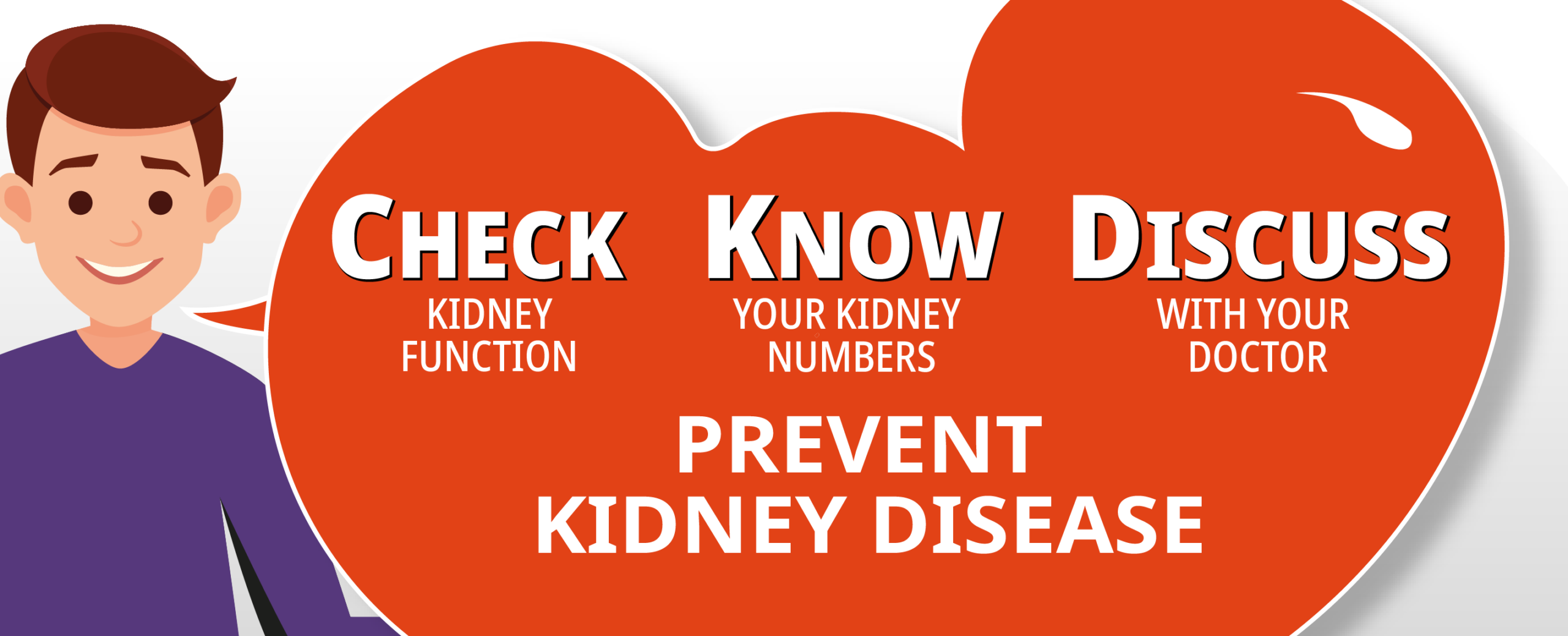
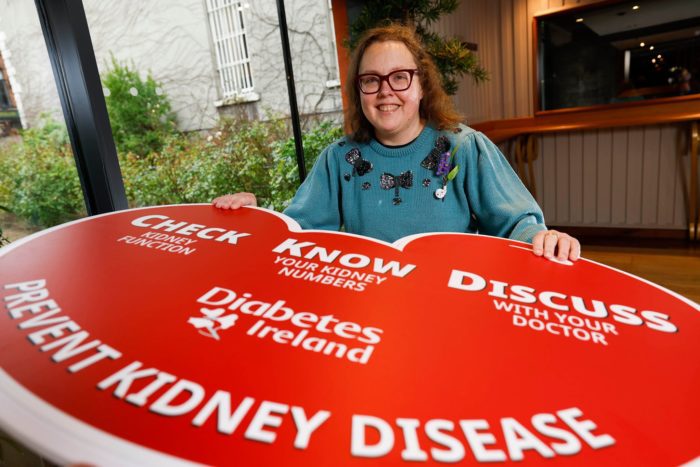
Diabetes Ireland ran a campaign to highlight the need for people living with diabetes to be aware of their kidney health. The campaign was launched to mark World Kidney Day on March 10th 2023 in collaboration with the Irish Kidney Association.
Chronic kidney disease (CKD) is a potential complication of diabetes, screening for kidney disease is a routine part of your diabetes care with your GP/diabetes team. Screening for chronic kidney disease is essential as in the early stages there are no symptoms so it can potentially go undiagnosed.
Therefore, it is essential that you:
Check kidney function
Know your kidney numbers*
Discuss with your doctor or nurse
*Kidney blood test GFR and urine test ACR, both tests are a routine part of diabetes check-ups with GP/diabetes team.
Discuss with your doctor or nurse
It is essential that as part of your routine diabetes check-ups with your GP or diabetes team that you discuss your kidney health and ensure you are taking all the necessary steps to help your kidneys remain as healthy as possible.
The kidneys have many important functions in the body such as cleaning and filtering the blood, getting rid of waste and water through the urine, and controlling blood pressure. If your kidneys are not functioning well this can impact other systems in your body such as your heart so it is important that you do all you can to protect them.
What causes kidney disease?
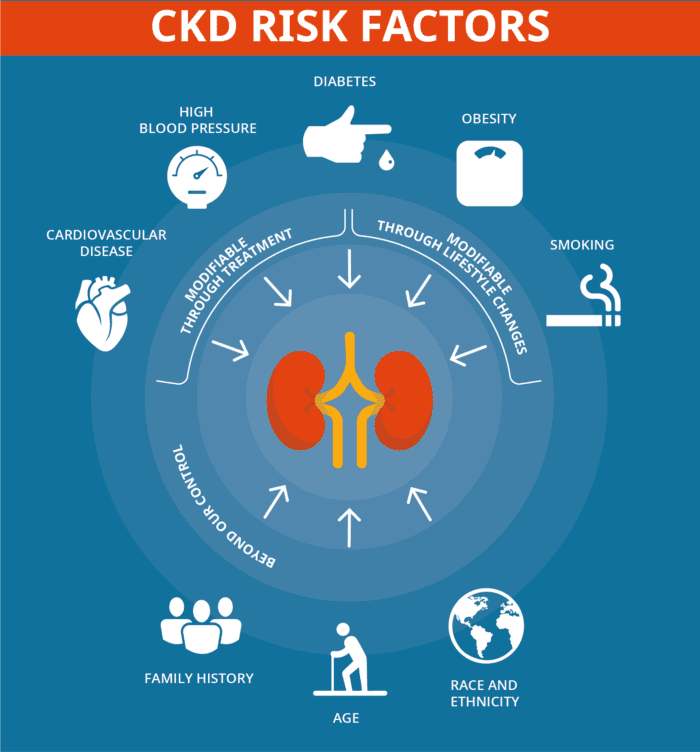
Kidney disease may occur slowly over many years, and in the early stages, there are no visible symptoms. There are many factors that can increase the chances of chronic kidney disease developing or progressing. High blood glucose (sugar) levels and high blood pressure over many years can damage the small blood vessels and tiny filters in your kidneys. Other risk factors for chronic kidney disease are increasing age and family history. It is important that you do what you can to control the modifiable risk factors to reduce the chances of chronic kidney disease developing or progressing.
A mild or moderate reduction in kidney function can go unnoticed as it may not cause symptoms, therefore routine screening using urine and blood tests is essential. One can feel perfectly healthy even though routine urine and blood tests have detected chronic kidney disease. The more advanced stages of chronic kidney disease may cause symptoms such as fatigue, fluid retention (swelling), loss of appetite, and nausea. These symptoms may be due to another medical condition so it is important to discuss any concerns/symptoms with your GP/diabetes team so they can investigate them further.
Illustration of CKD Risk Factors: Diabetes, Obesity, Smoking, Race and Ethnicity, Age, Family History, Cardiovascular Disease, High Blood Pressure
Check Kidney Function
Kidneys can be screened, and any early signs of kidney disease can be detected by doing routine kidney tests, i.e., urine and blood tests. Having these simple tests done is a routine part of diabetes care with your GP or diabetes team. By checking these simple urine and blood tests, your GP or diabetes team will be able to detect any kidney problems and treat them. Routine screening, early detection, and treatment of kidney disease can prevent further kidney function decline.
So, make sure to check your kidney function by requesting a urine test and a blood test from your doctor at least once a year (or as often as recommended by your GP/diabetes team).
Know your kidney numbers
Screening for kidney disease is a routine part of your diabetes care, it is important that you know the results of your urine and kidney blood tests.
Urine test: One of the early signs of kidney damage is when the body leaks abnormal amounts of protein in the urine. A simple urine test known as ACR (Albumin creatinine ratio) can detect this. Ensure you bring your urine sample (1st urine sample of the morning) to your diabetes check-up and discuss the results with your doctor or nurse.
Kidney blood test: A routine kidney blood test can help your doctor track your kidney function and alert them if there are any signs of decline. The blood test known as your GFR (glomerular filtration rate) is a measure of how well your kidneys are working.
Discuss your results with your doctor
Discuss your results with your doctor or nurse and ask what you can do to prevent or slow down the progression of kidney disease.
If any decline in your kidney function is detected, your GP or diabetes team will work with you to help manage your blood glucose and blood pressure to help protect your kidneys and prevent any further decline. The doctor may need to review your medication, order additional tests, or refer you to a kidney specialist (Nephrologist) for further assessment and monitoring of your kidneys.
Top tips to help reduce your risk of chronic kidney disease
Eat a healthy balanced diet.
Aim to achieve a healthy weight or waistline.
Aim for regular physical activity.
Don’t smoke.
Monitor your glucose levels at home as advised and seek support from your diabetes team if they are consistently outside target range.
Have routine checks with your diabetes team to monitor blood pressure, cholesterol, HbA1c, kidney function urine, and blood tests, know the results and discuss them with your doctor or nurse.
There are lots more information and support to help you.