Knowing how diabetes complications may affect your body specifically, your kidneys, heart, eyes, feet and nerves means you can take early action. By staying informed, attending regular check-ups, and working closely with your Healthcare Professional (HCP) you can be empowered to self-manage your own diabetes. Diabetes complications do not always have symptoms and can be silent which is why it’s important to be informed and to talk to your HCP about your risk and how you can reduce it.
Be Informed of diabetes complications and know how to reduce your risk.
-
Kidney health
Keeping your blood glucose and blood pressure in check can protect your kidneys and maintain kidney function. Having your kidney function blood test and urine test at least annually will monitor your kidney health.
-
Heart health
Monitoring your heart health by having regular blood pressure, glucose and cholesterol checks can reduce your risk of long-term cardiovascular complications, such as heart failure, heart attack and stroke.
-
Eye health
Diabetic retinopathy often has no signs or symptoms. Therefore, it is important to attend the free HSE National Diabetic RetinaScreen programme. Attending the annual screening allows for the early detection and treatment of any changes that may be seen in the retina and can protect your vision long into the future.
-
Nerve health
High blood glucose levels over a prolonged period can damage nerve health which can affect hands, feet, digestion and sexual health. Some people may experience symptoms such as pain, numbness and tingling, though not everyone experiences symptoms.
It is important to be aware that to reduce the risk of developing complications of diabetes it is vital to maintain your blood pressure, cholesterol and HbA1c readings within your personalised target ranges.
Even with regular care and best efforts to manage diabetes, changes in the body can still happen over time. This is why staying connected with your HCP is so important, early action can help manage symptoms and slow progression.
People living with diabetes are four times more likely to develop heart failure2
Be informed of symptoms & risk factors
Symptoms of heart failure include:3
- Coughing/wheezing
- Extreme tiredness or no energy
- Loss of appetite
- More frequent urination, especially at night
- Rapid heartbeat or palpitations
- Shortness of breath, even when lying down
- Swelling in the ankles/feet or stomach
- Weight gain over a short period (>2kg over 2 days)
Diabetes risk factors for heart failure include:3
- Duration of diabetes
- High blood glucose levels
- High blood pressure
- High cholesterol
- High BMI
- Existing renal disease
- Existing heart disease
For further information from Diabetes Ireland on heart failure click here.
In Ireland, almost 24% of people with diabetes aged over 50 develop chronic kidney disease4
Be informed about chronic kidney disease to reduce your risk of developing it
Risk factors associated with chronic kidney disease:5
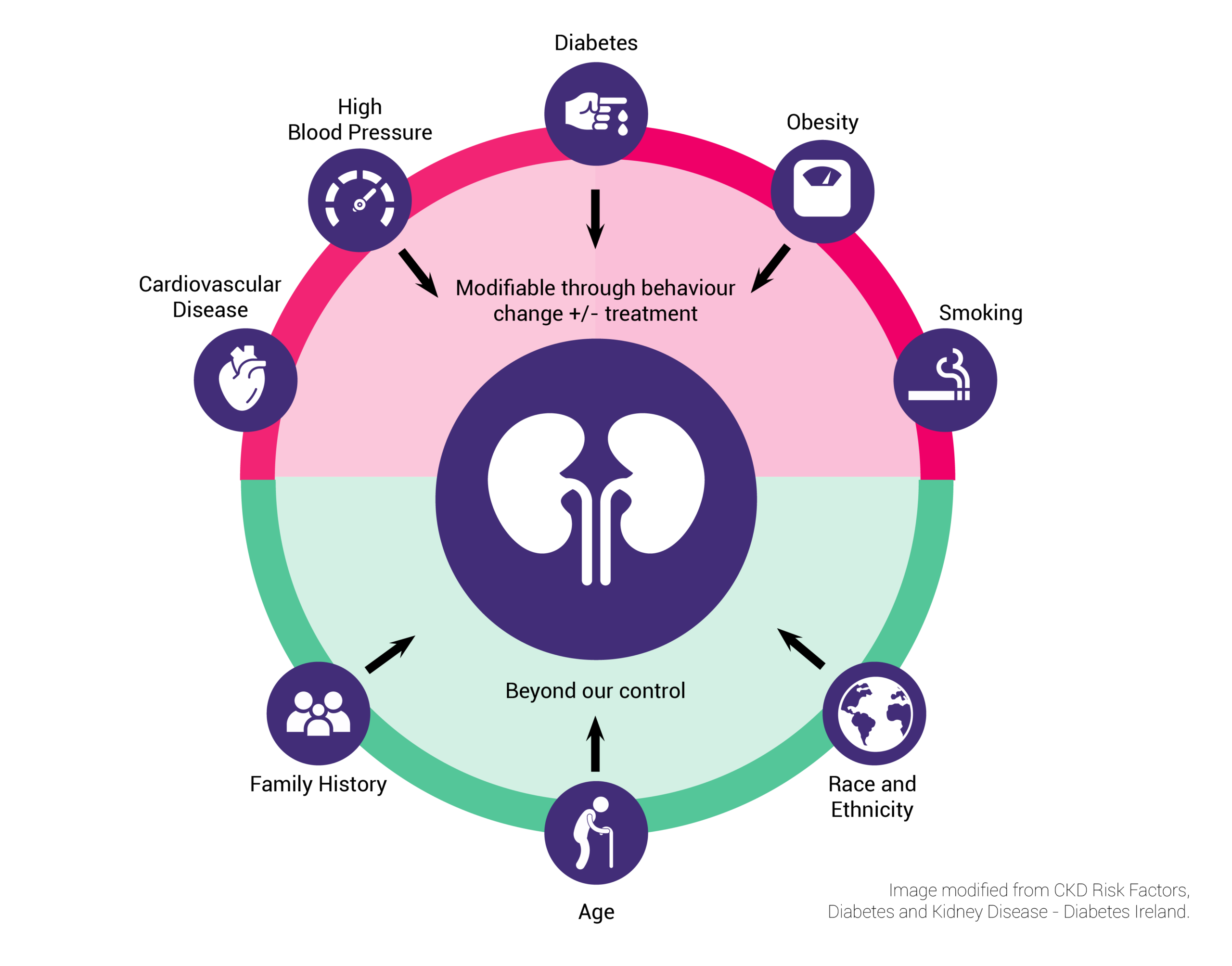
For further information from Diabetes Ireland on chronic kidney disease risk click here.
Be informed when you talk to your healthcare professional
- What should I know about diabetes and organ health?
- What are some potential signs of diabetes related complications that I should be aware of?
- Medical terminology can be hard to understand. Don’t be afraid to ask your HCP to explain something again, or to use simpler language if there’s something that you don’t understand
- Discuss possible symptoms of concern with your HCP and ask them about any tests or monitoring that you may need
- Ask your HCP for your blood pressure, cholesterol and HbA1c results and keep a record for yourself
References
- HSE – National Diabetes Statistics
- National Library of Medicine – Heart Failure in Patients with Diabetes Mellitus
- Check, Know, Discuss: Heart Failure Prevention – Diabetes Ireland
- Chronic Kidney Disease in community-dwelling adult age 50+ years in Ireland: A report from TILDA and the National Renal Office – page 16
- Diabetes and Kidney Disease – Diabetes Ireland
Veeva ID: IE-8039
Date of Preparation: August 2025