Think Type 1 Diabetes Think Test
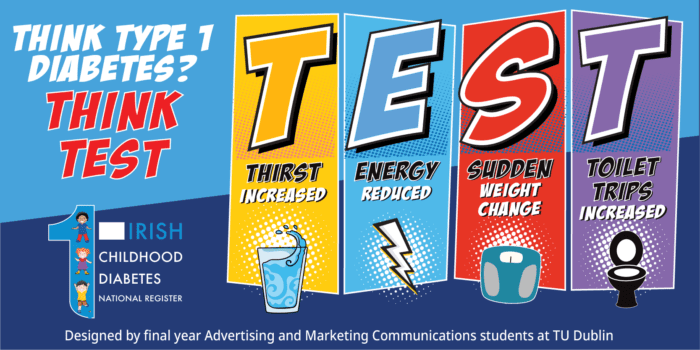
TEST… know what it stands for, recognise the symptoms, and treat early as time is critical in a diagnosis of type 1 diabetes.
TEST… know what it stands for, recognise the symptoms, and treat early as time is critical in a diagnosis of type 1 diabetes.
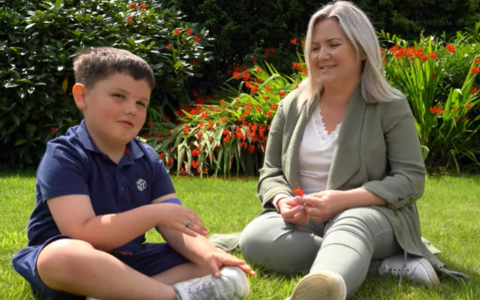
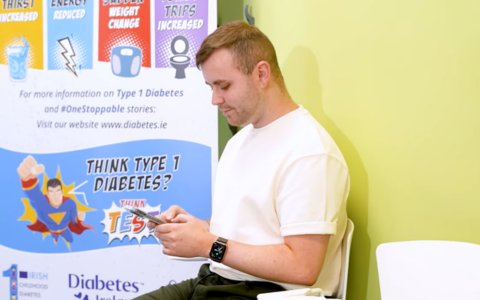
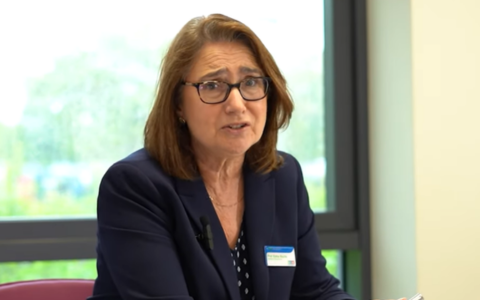
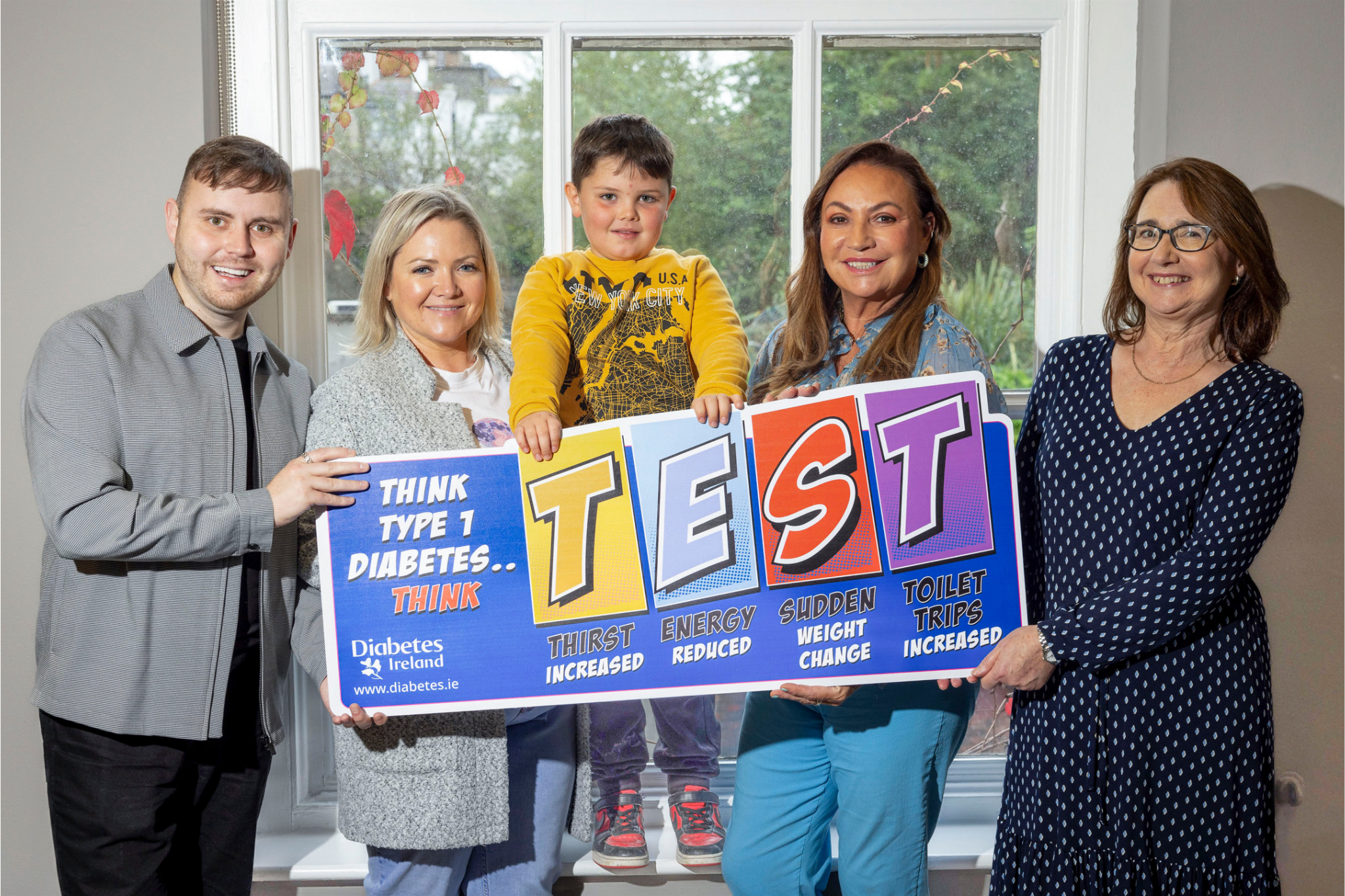
Diabetes Ireland and the Irish Childhood Diabetes National Register, supported by Norah Casey, Professor Edna Roche, Consultant Paediatrician and Endocrinologist, alongside diabetes advocates Eva Lee and her son Danny and Jay Hickey, aim to raise awareness among the general public about the symptoms of Type 1 diabetes, equipping individuals to recognise these signs early, seek help and avoid the development of Diabetic Ketoacidosis (DKA).
A delay in the diagnosis of Type 1 diabetes can quickly lead to a life-threatening complication called Diabetic Ketoacidosis, or, in short, DKA. Early recognition of the symptoms and early treatment can prevent the development of DKA.
Type 1 diabetes can affect individuals of all ages.
Ireland has a high incidence of Type 1 diabetes in children and adolescents, with Ireland in the top 25% worldwide for Type 1 diabetes incidence.
The number of children under 15 being diagnosed with Type 1 diabetes in Ireland has increased substantially, from 16.3 cases per 100,000 per year in 1997 to 27.136 cases per 100,000 per year in 2025. These figures are from the Irish Childhood Diabetes National Register.
The rate of childhood Type 1 diabetes in Ireland has been increasing at an average rate of 1.5% per annum since 2022, while remaining at this high incidence rate. There are around 370 new cases of Type 1 diabetes diagnosed each year in children under 15 in Ireland.
While there is a genetic element to Type 1 diabetes, only around one in 10 diagnosed Irish children has a history of Type 1 diabetes in a close relative, such as a parent or sibling. A diagnosis is a bolt out of the blue for most families.
Delays in diagnosis can happen because the symptoms of Type 1 diabetes are subtle.
We all need to know the symptoms of Type 1 diabetes so we can recognise them early and take action. The symptoms are the key indicators that you or your child might have Type 1 diabetes.
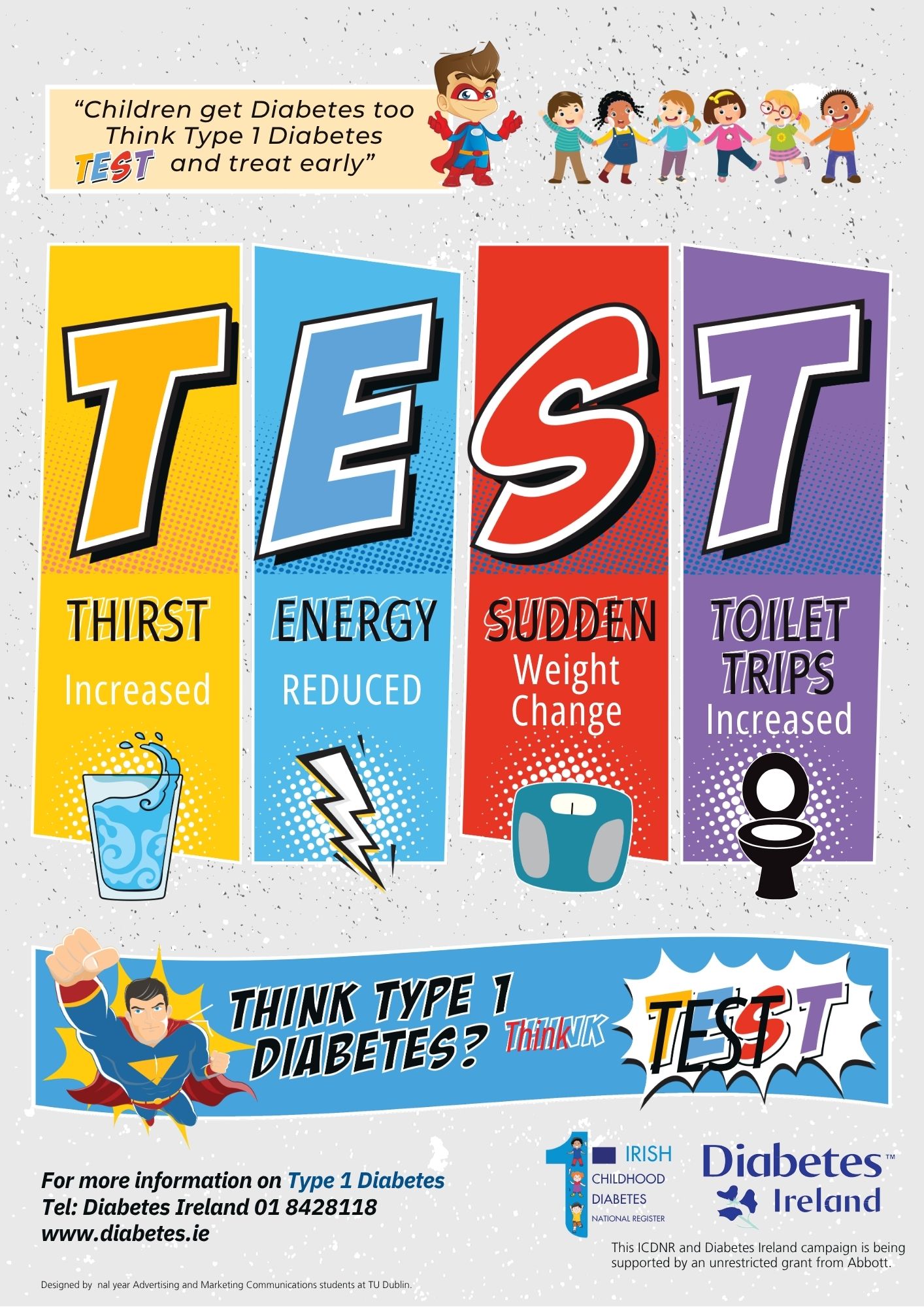
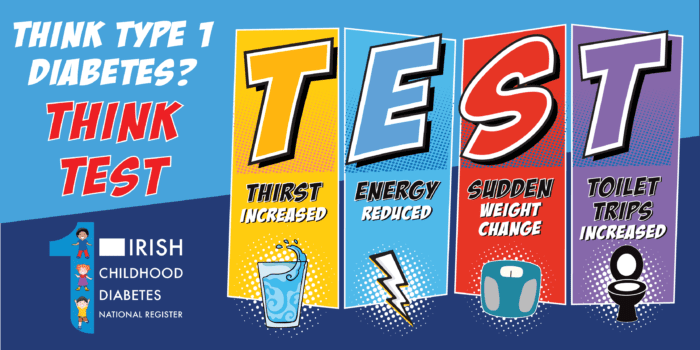
TEST, an easy-to-remember acronym, represents the symptoms of Type 1 diabetes.
If the test is positive, e.g. blood sugar over 11 mmol/l, you will need to go to your local hospital Emergency Department for early assessment and treatment.
Acting fast has great benefits – it will enable earlier diagnosis and treatment and can avoid the development of DKA. Avoiding DKA can make the initial treatment much easier for children and their families and has short- and long-term benefits.
If you or your child has diabetes, don’t worry. While a diagnosis of Type 1 diabetes is a lifelong condition, there are thousands of Irish people and indeed worldwide with Type 1 diabetes living their lives to the full each day.
Type 1 diabetes occurs because the body stops producing the hormone insulin, which enables the body to use glucose (sugar) as fuel. As a result, in untreated diabetes, the level of glucose in the body gets too high. If your child has the symptoms below, it is important that you seek urgent medical help. Early diagnosis improves the long-term outcome of diabetes. Late diagnosis can result in life-threatening Diabetic Ketoacidosis (DKA).
Acting fast has great benefits – it will enable earlier diagnosis and treatment and can avoid the development of DKA. Avoiding DKA can make the initial treatment much easier for children and their families and has short and long-term benefits.
Click here to learn how to manage type 1 diabetes.
If you or your child has diabetes, don’t worry, while a diagnosis of type 1 diabetes is a life-long condition, there are thousands of Irish people and indeed worldwide with type 1 diabetes living their lives to the full each day.
Type 1 diabetes occurs because the body stops producing the hormone Insulin which enables the body to use glucose (sugar) as fuel. As a result, in untreated diabetes, the level of glucose in the body gets too high. If you or your child has these symptoms below it is important that you seek urgent medical help. Early diagnosis improves the long-term outcome of diabetes. Late diagnosis can result in life-threatening diabetic ketoacidosis (DKA).
In type 1 diabetes, the body stops producing insulin. Insulin is a hormone produced by the pancreas that allows glucose (sugar) from food to enter the body’s cells and be used as fuel. When the body stops making insulin, the glucose from food cannot be used, and levels of glucose build up in the blood. The body responds to these high blood sugar levels by excreting the extra glucose in the urine, leading to the key symptoms of diabetes – passing large amounts of urine frequently, resulting in dehydration and increased thirst. Diabetes can be diagnosed at this stage.
However, if the diagnosis is delayed and symptoms persist, the body increasingly depends on a backup fuel supply and breaks down fat excessively to form acidic ketone bodies. These ketones build up in the body, changing the body’s acidity and resulting in the life-threatening condition of diabetic ketoacidosis. Diabetic ketoacidosis (DKA) is an avoidable complication of diabetes. DKA can be avoided by starting treatment and replacing the missing insulin.
The majority of children diagnosed with Type 1 diabetes do not have DKA at diagnosis and are diagnosed because of high blood sugar levels. However, a worrying proportion of our children and adolescents, more than 1 in every 4, have progressed to DKA at the time of their diagnosis.
The purpose of this campaign is to reduce the number of Irish children presenting with DKA by increasing awareness of the symptoms of T1D and encouraging early diagnosis.
The purpose of this campaign is to reduce the number of Irish children presenting with DKA by increasing awareness of the symptoms of type 1 diabetes and encouraging early diagnosis.
Download the poster and place it on a school, GP, post office, library, or shop notice board.
Download the leaflet and share it with family and friends. #Onestoppable and read some of the extraordinary achievements of young people with type 1 diabetes.
Follow us on our social media channels, like and share our message with your family and friends “Think type 1 diabetes, Think TEST… Thirst, Energy, Sudden, & Toilet Trips… Many ordinary people achieve extraordinary things every day while living with type 1 diabetes. Diabetes does not stop them… they are #ONESTOPPABLE”
 Head Office – Dublin
19 Northwood House
Northwood Business Campus
Santry, Dublin 9
D09 DH30
Regional Office - South
Enterprise House
36 Mary Street
Cork
T12 H6NH